

The Definitive Guide to Section 179 Expensing & First-Year Depreciation (Tax Year 2026)
Under the Internal Revenue Code (IRC), Section 179 serves as one of the most powerful capital expenditure incentives available to American commercial enterprises. Designed specifically to spur business capital investment, Section 179 allows qualifying businesses—ranging from sole proprietorships and limited liability companies (LLCs) to S-Corporations and C-Corporations—to deduct the entire purchase price of eligible equipment, machinery, technology, and qualifying commercial vehicles in the tax year the asset is placed in service, rather than depreciating the cost incrementally across traditional 5-, 7-, or 15-year MACRS recovery schedules.
Key 2026 Statutory Benchmarks (IRS Revenue Procedure 2024-40)
- Maximum Section 179 Deduction: $1,250,000 (adjusted upward from prior tax years for cost-of-living inflation under IRC § 179(b)(6)).
- Phase-Out Spending Threshold: $3,130,000. For every dollar of qualifying equipment placed in service beyond $3,130,000, the allowable $1,250,000 deduction is reduced dollar-for-dollar.
- Complete Phase-Out Ceiling: $4,380,000 ($3,130,000 threshold + $1,250,000 maximum deduction). Businesses acquiring more than $4,380,000 in equipment during 2026 receive $0 in Section 179 expensing.
- Heavy Passenger SUV Limitation: $31,300 for passenger vehicles rated between 6,001 and 14,000 lbs GVWR under IRC § 179(b)(5). Heavy commercial trucks and work vans remain exempt from this cap.
1. Qualifying Section 179 Property Standards (IRC § 179(d))
To be eligible for immediate Section 179 expensing, property must satisfy the statutory definition of "Section 179 property" under IRC § 179(d)(1). This encompasses depreciable property subject to the Modified Accelerated Cost Recovery System (MACRS) that is:
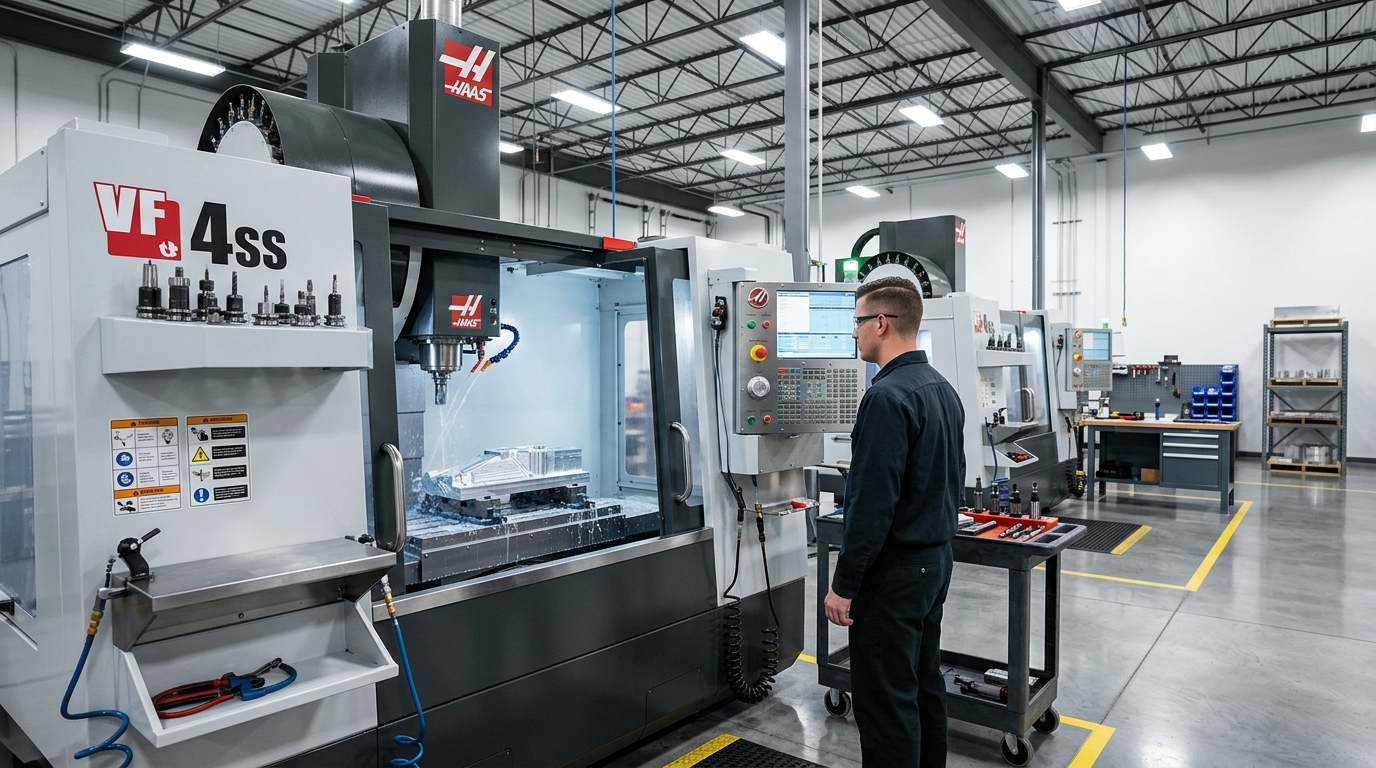
Includes industrial machinery, manufacturing tooling, CNC mills, excavators, tractors, dental and medical imaging systems, office furniture, point-of-sale hardware, and enterprise servers.
Under IRC § 179(d)(1)(A)(ii), computer software that is readily available for purchase by the general public, subject to a nonexclusive license, and has not been substantially modified qualifies for 100% write-off.
Under IRC § 168(e)(6) and § 179(e), interior improvements to nonresidential real property (commercial roofs, HVAC units, fire protection systems, and alarm/security systems) placed in service after the building was first placed in service.
The "Purchase" Requirement: Property must be acquired by "purchase" from an unrelated entity. Under IRC § 179(d)(2), property acquired from related persons (such as a spouse, ancestors, lineal descendants, or controlled entities with >50% common ownership) is strictly disqualified. Property acquired through inheritance, gifts, or tax-free like-kind exchanges (except for boot paid) is likewise non-qualifying.
2. Section 179 vs. Bonus Depreciation (IRC § 168(k)): Comparative Mechanics
While both Section 179 and Bonus Depreciation offer accelerated first-year deductions, they operate under fundamentally distinct statutory frameworks. Understanding their strategic sequence is critical to optimizing commercial tax returns:
| Provision Feature | Section 179 Expensing (IRC § 179) | Bonus Depreciation (IRC § 168(k)) |
|---|---|---|
| Annual Dollar Cap | $1,250,000 maximum per tax year | No Dollar Limit (100% of remaining basis) |
| Spending Phase-Out | Phases out between $3.13M and $4.38M | No Phase-Out (Available to Fortune 500 & small firms) |
| Net Operating Loss (NOL) | Cannot create or increase an NOL | Can create or increase a business NOL |
| Asset Flexibility | Can elect specific dollar amounts per asset | Applies to entire asset MACRS class (all-or-nothing) |
| State Tax Conformity | Conformed in majority of states (CA/NJ/PA cap at $25k) | Decoupled in ~30 states (full state add-back required) |
The Statutory Calculation Sequence: Under Treasury Regulations, depreciation must be computed in a strict three-tier sequence:
1. Section 179 Expensing: Claimed first to reduce the asset's depreciable basis dollar-for-dollar up to the $1,250,000 cap.
2. Bonus Depreciation (IRC § 168(k)): Applied second to the remaining depreciable basis.
3. Standard MACRS Depreciation: Applied third to any basis remaining after Section 179 and Bonus Depreciation, utilizing standard recovery tables and applicable conventions (half-year or mid-quarter).
3. The Active Business Income Limitation & Carryforward Rules (IRC § 179(b)(3))
A crucial statutory constraint governs Section 179 expensing: under IRC § 179(b)(3)(A), the total Section 179 deduction allowable for any taxable year cannot exceed the aggregate amount of taxable income derived from the active conduct of any trade or business during that tax year.
Active Business Income Includes W-2 Wages
Under Treasury Regulation § 1.179-2(c)(6)(iv), employees are considered engaged in the active conduct of the trade or business of being an employee. Consequently, W-2 wages, salaries, and tips earned by the taxpayer (or the taxpayer's spouse if filing jointly) are included in active trade or business income. This allows a business owner with low business net income but significant W-2 income to fully utilize their Section 179 deduction.
Indefinite Carryforward: Any Section 179 amount disallowed due to the business income limitation is not lost. Under IRC § 179(b)(3)(B), the disallowed portion carries forward indefinitely to subsequent tax years (reported on IRS Form 4562 Line 13) until the business generates sufficient taxable income to absorb it.
4. Commercial Vehicle Weight Thresholds & Luxury Auto Limits (IRC § 280F)
Motor vehicles are classified as "Listed Property" under IRC § 280F(d)(4) and are subject to stringent weight-based write-off rules. The vehicle's Gross Vehicle Weight Rating (GVWR)—the maximum operating weight specified by the manufacturer, found on the driver-side door jamb placard—determines its deduction eligibility:
Subject to strict IRC § 280F luxury auto limits. First-year total depreciation (including Section 179 and bonus) is strictly capped at approximately $20,400 for tax year 2026.
Under IRC § 179(b)(5), Section 179 expensing is capped at $31,300 for 2026. However, any purchase price above $31,300 is eligible for 100% first-year Bonus Depreciation under IRC § 168(k).
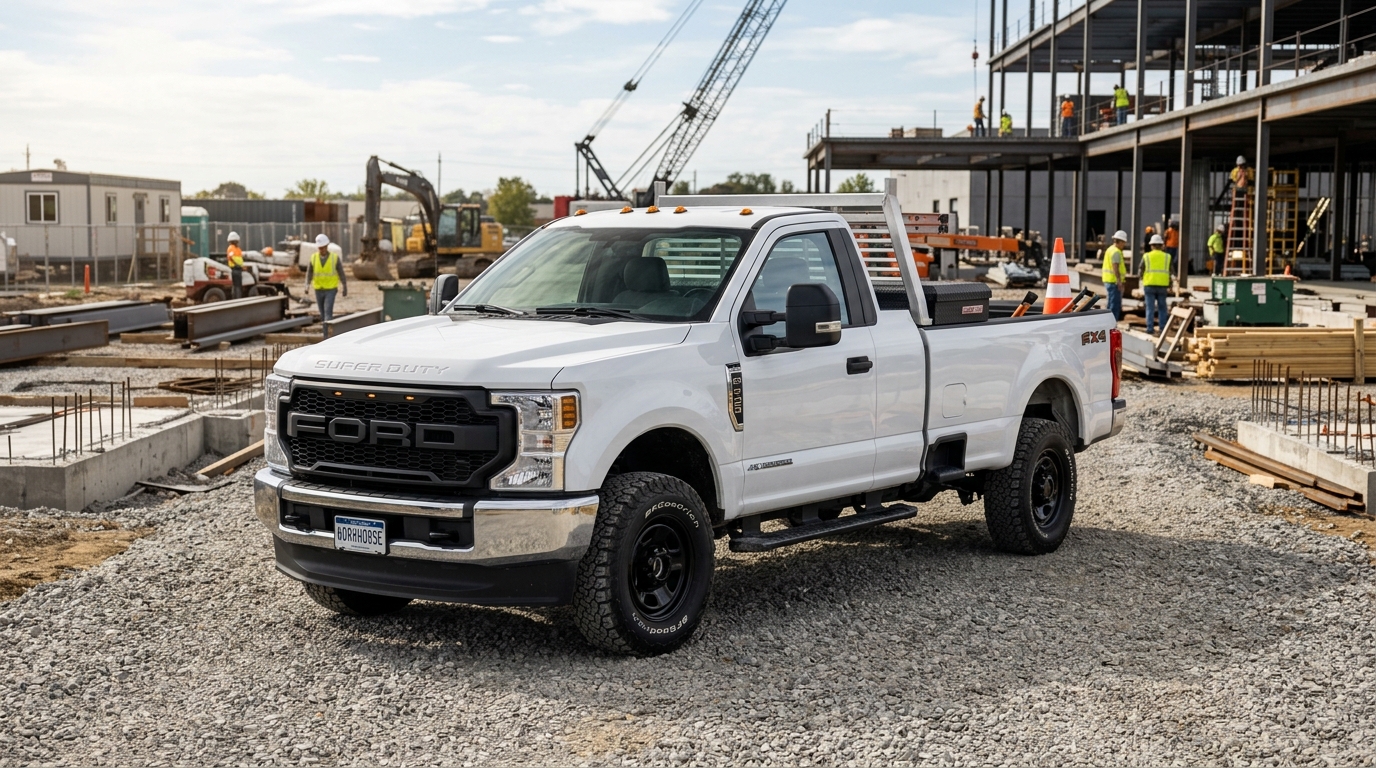
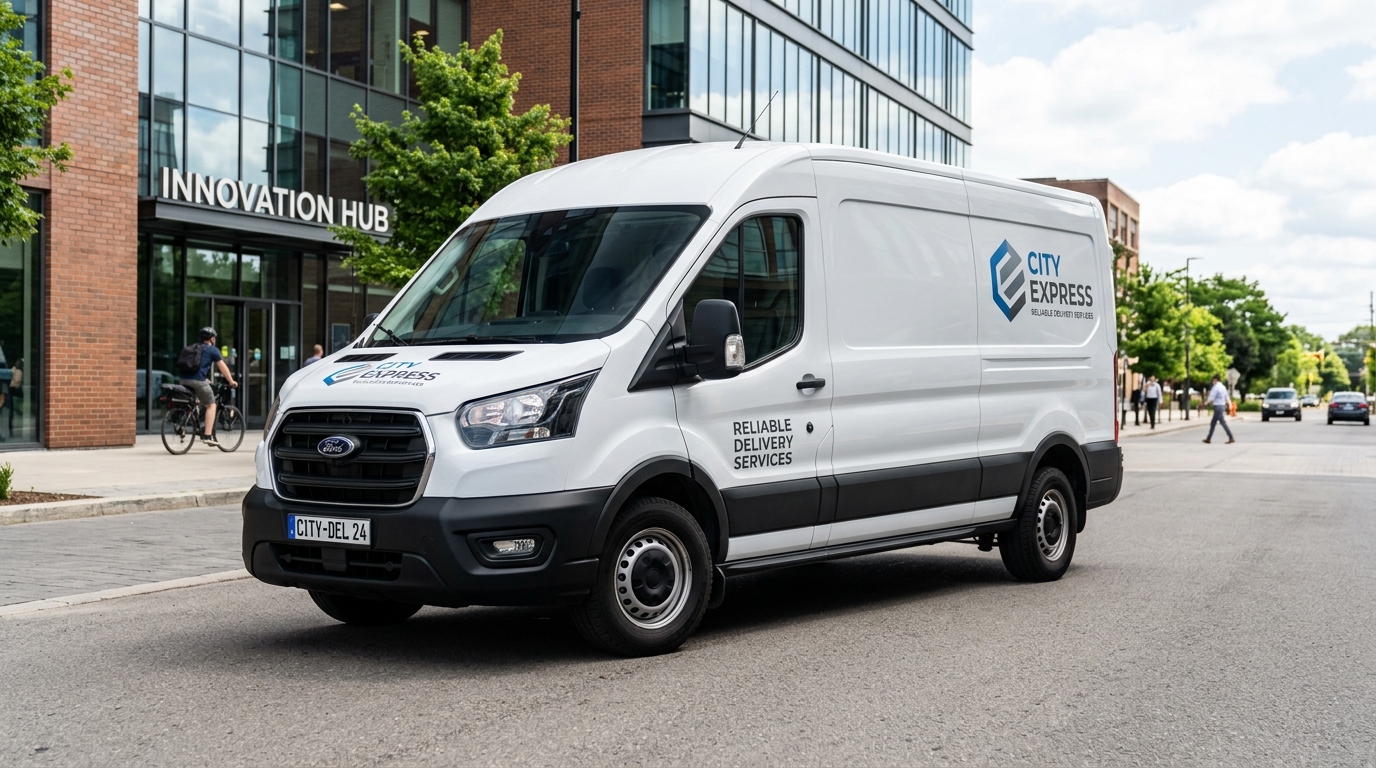
Pickups with bed length ≥ 6 feet (e.g. Ford F-250, Silverado 2500, Ram 2500), cargo vans with no rear seating, and 9+ passenger shuttles qualify for 100% of the full $1,250,000 Section 179 cap with zero luxury auto restrictions.
5. Commercial Clean Vehicle Credit (IRC § 45W) Stacking Strategy
Commercial buyers acquiring electric business vehicles (such as the Tesla Cybertruck, Ford F-150 Lightning, Chevy Silverado EV, or Ford E-Transit) can stack the IRC § 45W Commercial Clean Vehicle Credit alongside Section 179 expensing for unprecedented Year-1 cash savings:
- Credit Amount: Up to $7,500 for vehicles under 14,000 lbs GVWR, and up to $40,000 for vehicles with GVWR of 14,000 lbs or more.
- No Income Caps: Unlike the personal EV credit under IRC § 30D, the commercial § 45W credit has no modified adjusted gross income (MAGI) caps and no North American battery manufacturing requirements.
- Basis Adjustment Formula: Under IRC § 45W(d)(1), the depreciable basis for Section 179 must be reduced by the credit claimed:
Depreciable Section 179 Basis = Total Purchase Price - IRC § 45W Credit Claimed
6. Section 179 Recapture Rules: Avoiding Costly Clawbacks (IRC § 179(d)(10))
Section 179 expensing requires the asset to be used predominantly (more than 50%) in an active trade or business throughout its entire MACRS recovery period. If business use drops to 50% or below in any year prior to the end of the recovery period, the taxpayer must trigger Section 179 Recapture under IRC § 179(d)(10):
Recapture Formula & Tax Impact
Recapture Amount = Section 179 Deduction Claimed - Allowable MACRS Depreciation
The difference is reported as ordinary income on IRS Form 4797 Part IV Line 33 in the tax year business use falls to ≤50%, and is subject to full federal and state ordinary income tax rates.
7. How to File IRS Form 4562: Part I Line-by-Line CPA Walkthrough
To elect Section 179 expensing, taxpayers must file IRS Form 4562 (Depreciation and Amortization) with their timely filed federal income tax return (Form 1040 Schedule C, Form 1065, Form 1120-S, or Form 1120). Below is the line-by-line preparation protocol:
- Line 1 (Maximum Dollar Limitation): Enter
$1,250,000. - Line 2 (Total Cost of § 179 Property Placed in Service): Enter the total purchase price of all Section 179 assets placed in service during 2026.
- Line 3 (Threshold Cost Limitation): Enter
$3,130,000. - Line 4 (Reduction in Limitation): Subtract Line 3 from Line 2 (if greater than zero). If Line 2 exceeds $3,130,000, this reduces your allowable cap dollar-for-dollar.
- Line 5 (Dollar Limitation for Tax Year): Subtract Line 4 from Line 1 (cannot be less than zero).
- Line 6 (Elected Cost Breakdown): List asset descriptions (e.g. "Haas VF-2 CNC Mill"), total cost, and the specific dollar amount elected for Section 179.
- Line 11 (Business Income Limitation): Enter your net active business income for the tax year (including W-2 wages).
- Line 12 (Section 179 Expense Deduction): The smaller of Line 5/6 or Line 11. This is your allowable deduction for the year!
- Line 13 (Carryover of Disallowed Deduction): Any excess from Line 11 carries forward to 2027.
Frequently Asked Questions About Section 179 (2026 Rules)
Can used equipment qualify for Section 179 expensing?
Yes! Both new and used equipment qualify for the full Section 179 deduction, provided the equipment is "new to you" (i.e. not previously owned by the business or acquired from a related party under IRC § 179(d)(2)).
What does "placed in service" mean for Section 179?
Under Treasury Regulation § 1.179-4(e), property is considered placed in service when it is "in a condition or state of readiness and availability for a specifically assigned function." Ordering or paying for equipment before December 31 is insufficient; the equipment must be delivered, installed, and ready for commercial operation by December 31, 2026.
Can Section 179 deductions create a net operating loss (NOL)?
No. Section 179 deductions cannot exceed taxable business income. However, any disallowed deduction carries forward indefinitely under IRC § 179(b)(3)(B). In contrast, Bonus Depreciation under IRC § 168(k) has no income limitation and can create or enlarge a Net Operating Loss.
Does equipment financed through a loan or lease qualify?
Yes! Equipment financed via commercial bank loans or $1 Buyout Capital Leases qualifies for 100% of the Section 179 deduction in the first year, even if you make zero or minimal down payment. This creates immediate net-positive first-year cash flow.
How does California's $25,000 Section 179 cap work?
California explicitly decouples from federal limits under CA Rev. & Tax Code § 17201, capping state deductions at $25,000 with a $200,000 phase-out. Deductions claimed on federal Form 4562 above $25,000 must be added back to California taxable income via Form FTB 3805P.